The largest NEAR Intents referral sources and affiliates by sampled 24h cross chain swap volume, as the Explorer reports them. For the full picture — every integrator named, ranked across 24h/7d/30d/all-time, with the routing SDKs that carry them — see NEAR Intents Integrators.
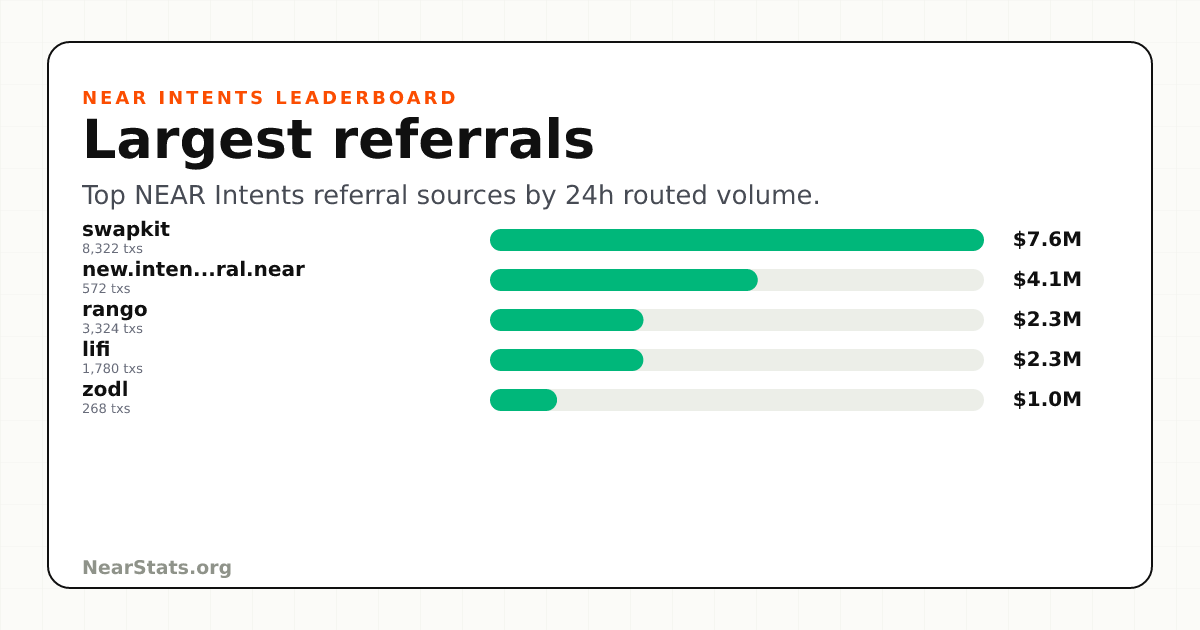
Top referral sources
| Referral source | Volume | Swaps |
|---|---|---|
| swapkit | $23.7M | 12,766 |
| zodl | $11.7M | 510 |
| lifi | $4.9M | 2,513 |
| cow | $2.4M | 181 |
| rango | $2.2M | 1,839 |
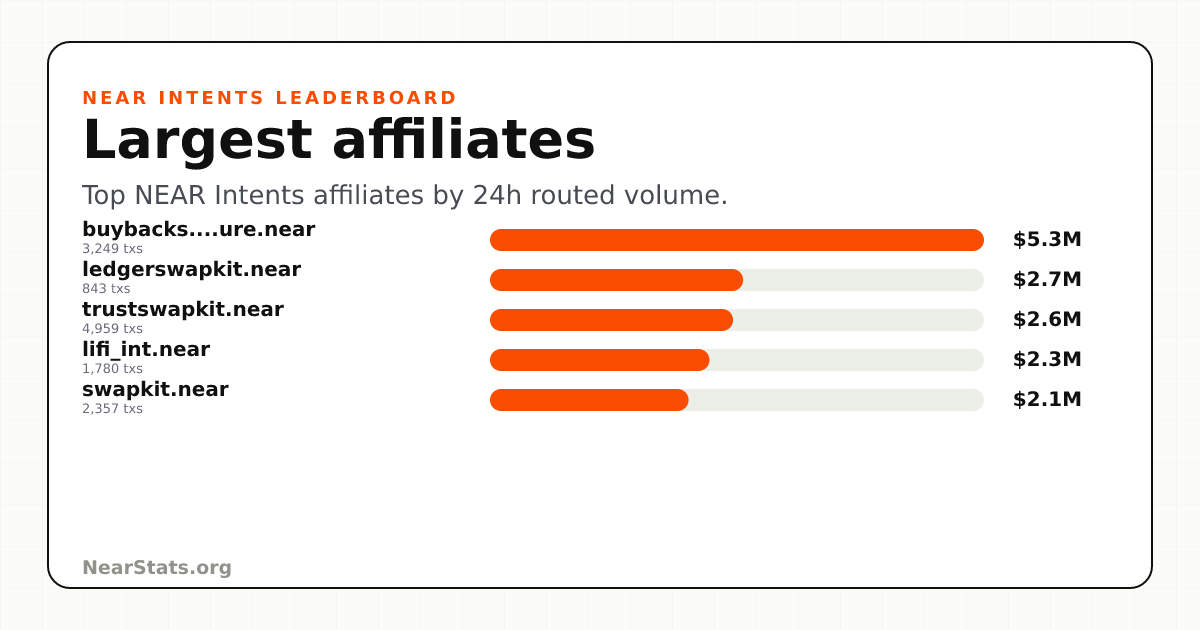
Top affiliates
| Affiliate | Volume | Swaps |
|---|---|---|
| buybacks....ure.near | $24.7M | 9,141 |
| zodlswaps.near | $11.7M | 510 |
| swapkit.near | $11.0M | 4,251 |
| ledgerswapkit.near | $6.8M | 1,598 |
| thorswap.near | $5.3M | 294 |
Referrals vs affiliates, explained
Both identify the application that routed a swap — the wallets, aggregators, and interfaces that plug into NEAR Intents. The referral tag is set by the routing interface itself (SwapKit, Rango, LI.FI, and peers); affiliates are fee recipients attached to swaps. Together they map the distribution layer: NEAR Intents is infrastructure, and this leaderboard shows who actually brings the users.
The concentration is informative. A protocol whose volume flows through many independent interfaces has real integration demand; the spread across 5 tracked referral sources here — from cross-chain aggregators to Telegram bots — is one of NEAR Intents' quieter strengths. Interface-level attribution like this is data most explorers don't publish at all.
Frequently asked questions
- Which app routes the most NEAR Intents volume?
- swapkit currently leads with $23.7M in sampled routed volume.
- How do affiliates earn on NEAR Intents?
- Interfaces can attach an optional affiliate fee to swaps they route; solvers quote all-in prices that include it. The leaderboard ranks recipients by the volume of swaps carrying their tag.
- Can my app integrate NEAR Intents?
- Yes — the protocol is permissionless to integrate, and routing SDKs like SwapKit and LI.FI already carry it. Integrations appear on this leaderboard automatically once they route volume.